
What are journalists missing from the state of Delaware? What would you most like WHYY News to cover? Let us know.
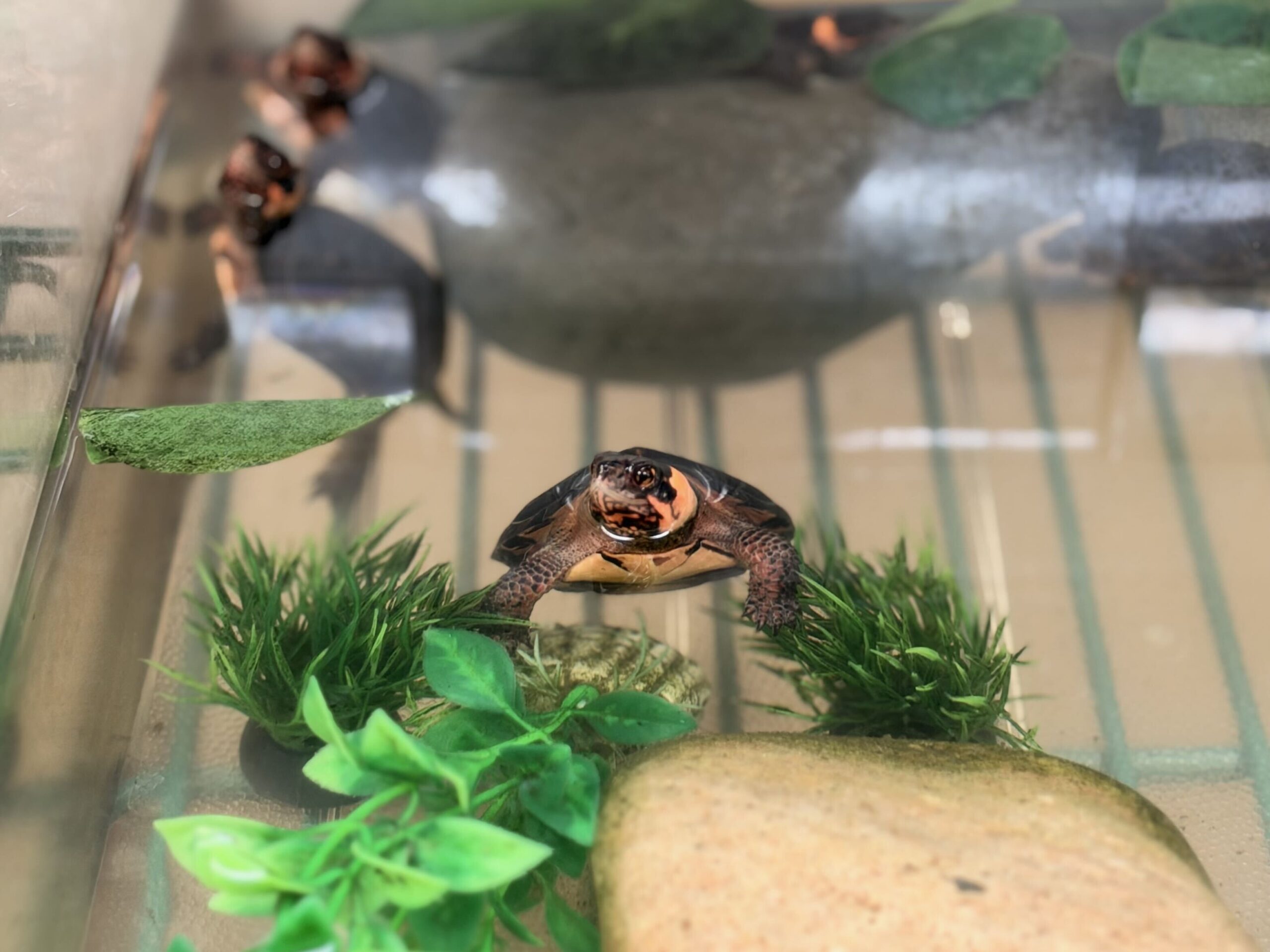
The smallest turtle species in North America, and one of the smallest in the world, calls Delaware home. But despite its small size, the bog turtle faces a growing threat to its survival.
Federally listed as threatened and classified as endangered in Delaware, the bog turtle population has dwindled over the years, leaving just two known sites in the state where the turtles remain.
“In the state of Delaware, it’s an endangered species. And we’ve been monitoring bog turtle populations in the state since 1992,” said Nate Nazdrowicz, a herpetologist with the state’s Department of Natural Resources and Environmental Control’s Division of Fish and Wildlife.
“We have noticed over the course of the years that the populations have been declining. They originally had roughly 20 locations from where the [first] bog turtle was found in the state,” he said.
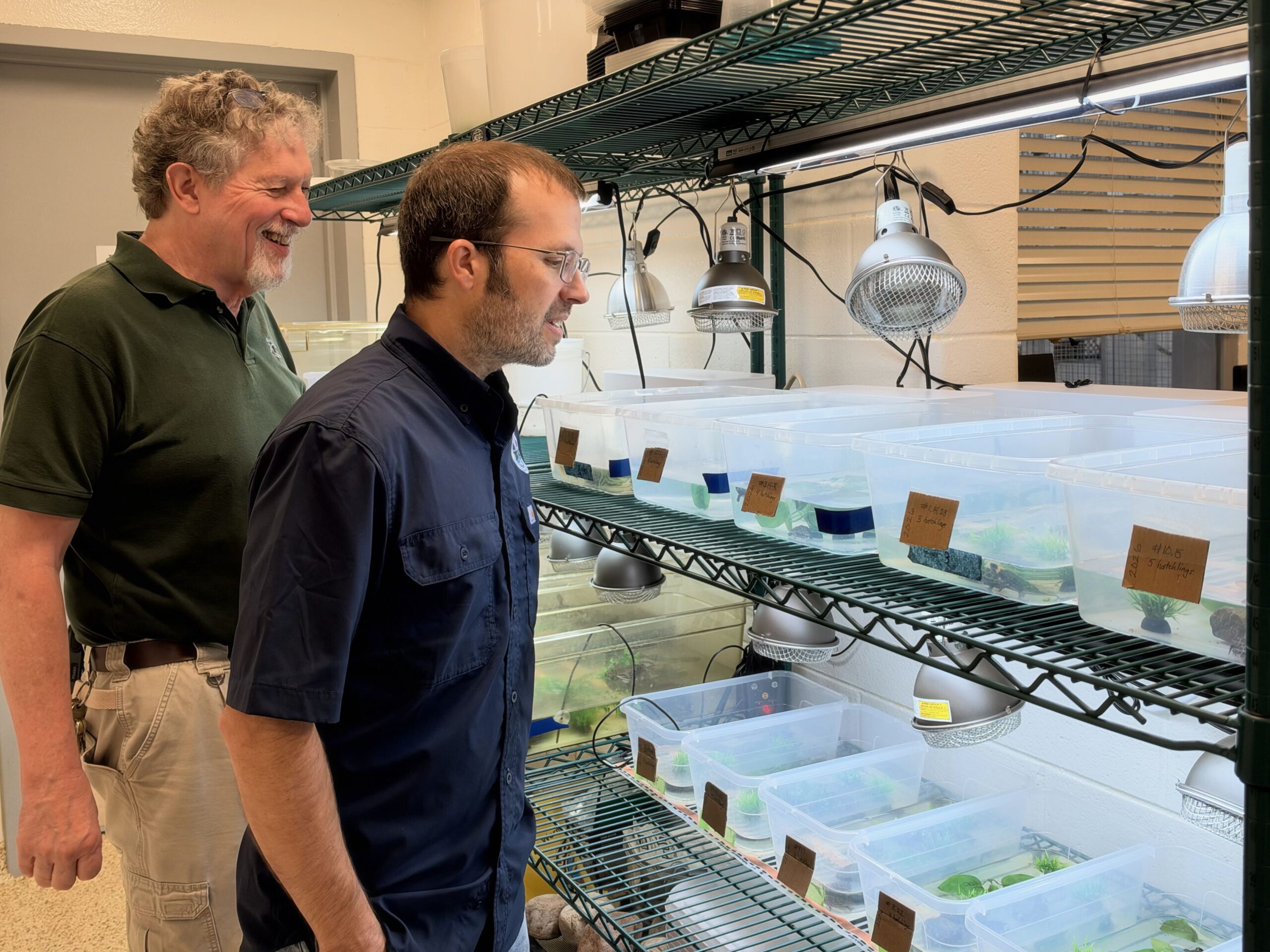
By the early 2000s, that number had fallen to about five locations. Today, only two remain. One of the biggest factors behind that decline is how Delaware’s landscape has changed over time.
Bog turtles typically inhabit shallow, muddy wetlands with slow-moving water. They depend on open spaces with grasses and sedges for shelter and reproduction, making changes to these delicate habitats a threat to their survival.
Nazdrowicz said agricultural practices once helped maintain the wetlands these turtles depend on. Cattle grazing, for example, kept trees from taking over areas that were too wet to farm.
“Previously these wet areas were within the farm matrix,” he said. “You couldn’t farm it because it was too wet. So a lot of people would graze their cattle through it. And that helped keep the trees from growing up and you know converting into a forest. When we lost all of that agriculture from this region, we no longer had the mechanism to prevent the habitats from naturally changing.”
Without those grazing practices, trees and other vegetation began taking over the wetlands, changing the landscape and limiting the sunlight needed for the sedges bog turtles depend on to reproduce.
“We have lost a lot of habitats that we previously had because trees have grown up. That shades out the grasses, which are very important for bog turtle reproduction and then it just makes the habitat no longer suitable for the turtles,” Nazdrowicz said.


